
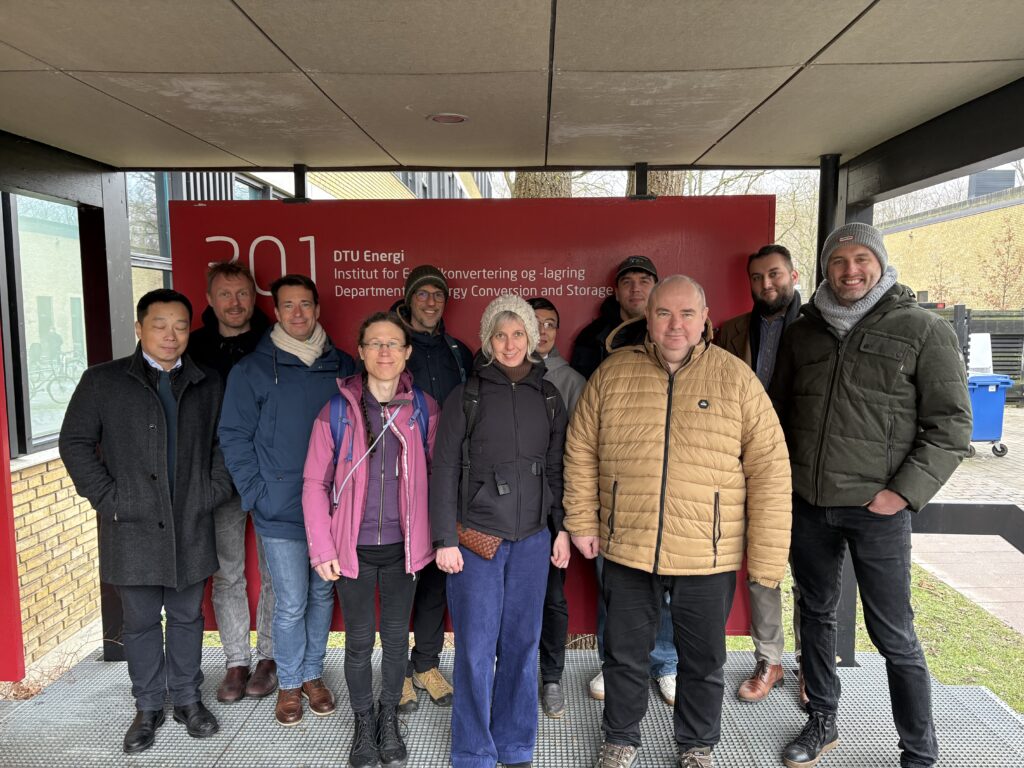
The CHARGE partners met on 21 January in Lyngby, Denmark, hosted by the Technical University of Denmark. The project officially began on 1 December 2025 and runs for 36 months.
Funded through the Clean Energy Transition Partnership Joint Call 2024, CHARGE addresses the cost and durability of solid oxide electrolysis for green hydrogen production.
Materials, stacks, and operation
The project combines impurity-tolerant cells, low-cost coated steel interconnects, impurity mitigation, and AC:DC operation. It aims to improve performance under the dynamic conditions associated with renewable electricity supply.
Gdańsk Tech contributes research on high-temperature corrosion, low-cost interconnect materials, and impurity emissions from balance-of-plant components, alongside dissemination and exploitation activities.
A shared effort
The consortium includes DynElectro, Technical University of Denmark, Gdańsk University of Technology, COAT-IT, Forschungszentrum Jülich, and VERMES SOC Technology.